
I didn’t plan to spend a night in a Japanese love hotel. It just sort of happened. After a long day exploring Shinjuku’s buzzing streets, I passed a narrow alley lined with glowing signs that looked like something out of a video game. Some signs had hearts, others had silhouettes of couples, and all of them had prices listed by the hour. I had heard about Japanese love hotels before, but never thought I’d actually walk into one. Curiosity got the best of me.
That night, I stepped into a world that was nothing like I expected.
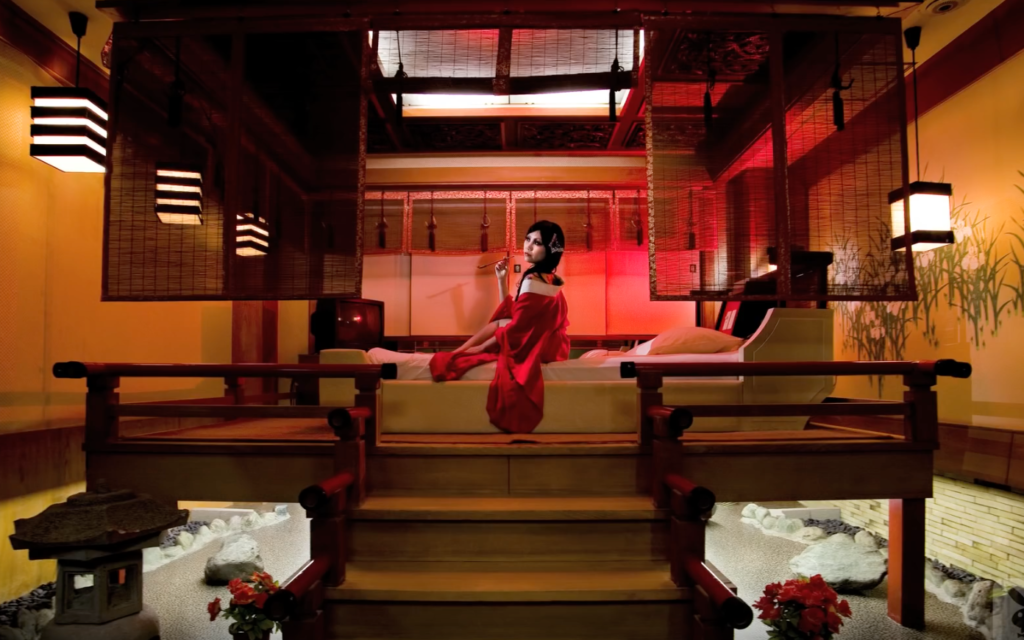
What Even Is a Japanese Love Hotel?
Before going any further, it helps to clear something up. Japanese love hotels are not sketchy motels or hidden adult-only spaces. After staying in one myself and walking past plenty more across Tokyo, I came to see them as hotels built around privacy, convenience, and flexibility rather than judgment or awkward interactions.
Unlike regular hotels, there is no front desk, no ID checks, and no small talk. You walk in, choose a room from a digital screen, pay, and head straight to your room. The first time I did it, it felt strange how easy it was. By the end of the night, it made perfect sense.
The main purpose of Japanese love hotels is to offer a private space where no questions are asked. That might be for couples, people who live in small apartments, or travelers like me looking for a quiet and comfortable place to sleep. Once you are inside, the room is yours and the outside world disappears.
Most love hotels charge by short stays called “rest” or by overnight stays called “stay,” which usually start late in the evening. Prices depend on the room and the time, but many rooms are larger and better equipped than standard budget hotels. During my stay, the room was clean, modern, and surprisingly relaxing.
You will find Japanese love hotels in most major cities, especially in Tokyo neighborhoods like Shinjuku, Shibuya, and Ikebukuro. They are easy to recognize once you know what to look for, with bright signs, room photos, and prices clearly displayed. The experience may feel secretive at first, but it never felt unsafe or uncomfortable to me. Instead, it offered a level of privacy and simplicity that is rare in normal hotels, and that is exactly the point.
Choosing My First Japanese Love Hotel
By the time I decided to stay in a Japanese love hotel, I had already walked past enough of them to know what I wanted and what I wanted to avoid. Some looked tired and a little too dim for comfort. I kept going until I found one that felt modern, quiet, and well cared for. Experience has taught me that first impressions matter, especially in places built around anonymity.
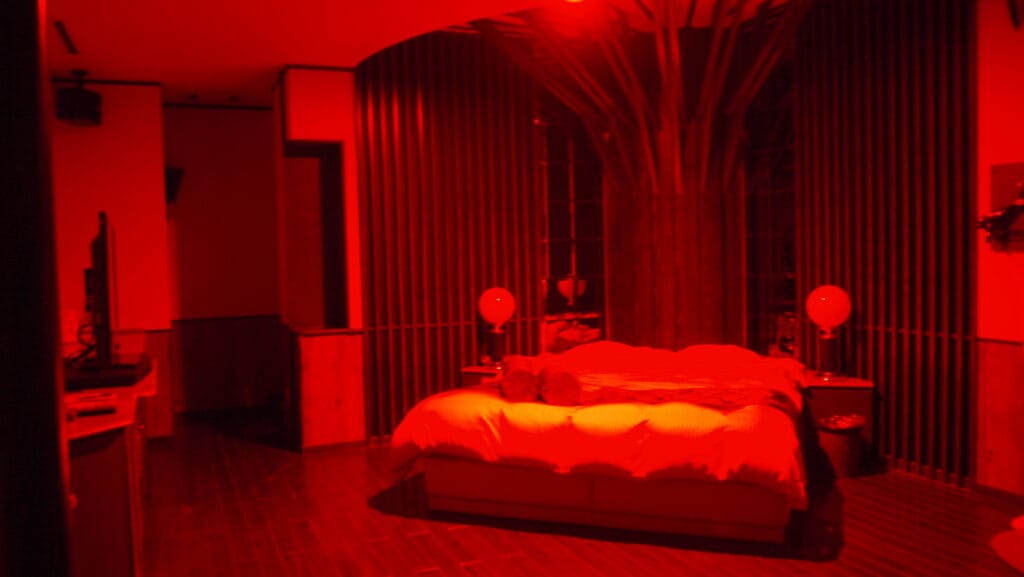
The entrance was discreet, with a touchscreen near the door displaying available rooms. Each one had its own personality, ranging from soft and romantic to full-on neon fantasy. I went with a room that leaned into the experience, a giant round bed, glowing pink lights, and just enough excess to make it fun. The price came to about 8,000 yen for the night, which is roughly 55 dollars. For Tokyo, that felt like a steal.
Once I made my selection, the screen flashed my room number. A small automated window slid open, I paid in cash, and that was it. No names, no paperwork, and no awkward eye contact. Within minutes, I was on my way upstairs with a key and total privacy.
Inside the Room
The moment I stepped inside, it was clear this was not a typical Japanese hotel room. The space was generous, easily larger than most business hotels I had stayed in around the country. The bed alone could have passed for luxury, backed by mood lighting and a massive flat-screen TV. There was also a massage chair, a small fridge, and a bathroom that felt closer to a spa than a hotel.
One thing Japanese love hotels do exceptionally well is amenities. The bathroom was stocked with toothbrushes, razors, shampoo, conditioner, and even bath salts. Everything was clean, organized, and clearly designed for comfort. Out in the hallway, vending machines covered the basics, drinks, snacks, and a few items that made the purpose of the hotel very clear.
Nothing about the room felt awkward or uncomfortable. It was polished, quiet, and surprisingly cozy. For a place built around short stays and secrecy, it delivered comfort better than many hotels that charge twice as much.

Who Uses Japanese Love Hotels?
After spending time around them and staying in one myself, it became obvious that Japanese love hotels are used by a much wider range of people than most outsiders assume. Yes, young couples show up looking for a bit of excitement, but they are only one part of the picture.
Married couples use love hotels for the privacy they cannot get at home. People living with parents or extended family use them as a quiet escape. Some visitors are there for discretion during affairs, and no one pretends that side does not exist. Solo travelers like me also use them, often without any romantic angle at all. When you want space, silence, and a comfortable bed without questions, they make a lot of sense.
I even saw groups of friends heading in together, half joking, half curious, treating it as an experience rather than anything taboo. In Japan, love hotels are woven into everyday life in a way that feels practical rather than scandalous. In a country filled with small apartments, thin walls, and limited personal space, they serve a simple purpose. They give people a place to be alone, however they define that.
The Themes Get Wild
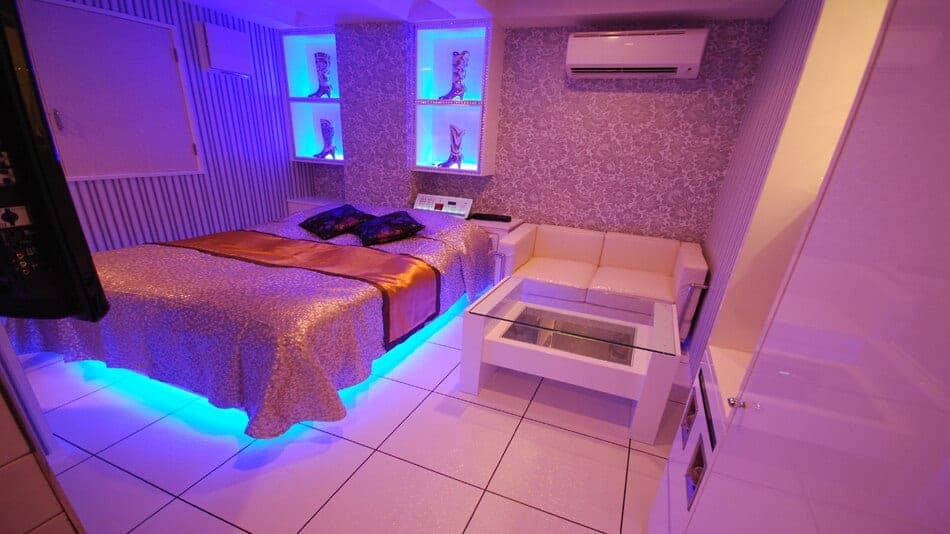
While my room leaned more toward stylish and comfortable, plenty of Japanese love hotels fully commit to fantasy. Walking past other buildings made that very clear. Some rooms are playful and romantic, with soft lighting, oversized beds, and dramatic bathtubs meant to feel indulgent rather than outrageous.
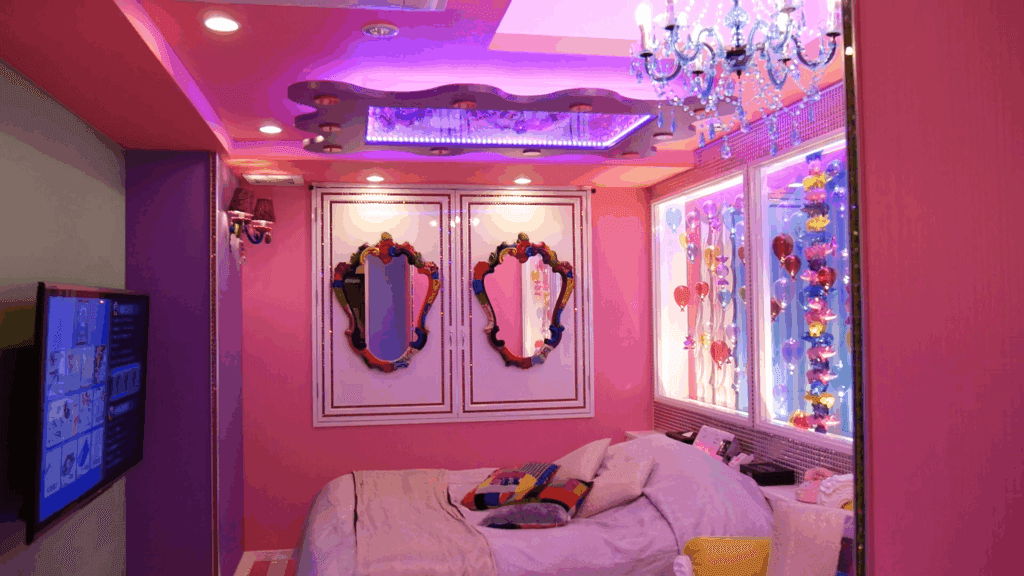
Others go much further. I saw hotels advertising rooms designed like classrooms, jail cells, doctor’s offices, and fantasy sets straight out of a movie. Some feature neon lighting, mirrored ceilings, karaoke machines, rotating beds, or elaborate sound systems. The goal is not subtlety. It is escape.
Even if you never book one of the more extreme rooms, knowing they exist is part of understanding the culture. Japanese love hotels are not trying to be realistic or reserved. They are meant to pull you out of daily life and drop you into something completely different for a few hours or a night. I did not stay in one of the wildest rooms, but after seeing what was available, I understood the appeal. For many guests, the theme is just as important as the privacy.
No Judgment, Just Privacy
What stood out to me most about staying in a Japanese love hotel was how frictionless the entire experience felt. There was no check-in desk, no small talk, and no need to explain why I was there. I walked in, chose a room, paid, and disappeared behind a closed door. That was the whole exchange.
Once inside, the sense of privacy was real. Thick walls, solid doors, and a layout designed so guests rarely cross paths. I never heard another room and never saw another guest. For a city as busy as Tokyo, that level of quiet is rare. If you are used to hostels or crowded budget hotels, the contrast is striking.
For travelers who value privacy over social spaces, love hotels are an underrated option. They are often cheaper than standard hotels in central areas and far more comfortable than you might expect. You come and go freely, and no one notices or cares.
Safety and Cleanliness
I went in expecting clean, but the level of hygiene still impressed me. Fresh sheets, spotless bathroom, and even small details like sealed remote controls showed how seriously cleanliness is taken. Everything felt intentional and well maintained, not thrown together.
Japanese love hotels operate like a professional hospitality business, not a back-alley secret. Security cameras, controlled access, and clear payment systems all add to the sense that these places are built to run smoothly. I never felt unsafe or uncomfortable at any point during my stay.
As with anywhere, common sense goes a long way. Stick to busy neighborhoods, check recent reviews when possible, and trust your instincts. If a place feels off, move on. There is no shortage of options.
Staying Alone? Totally Fine
Staying in a Japanese love hotel by myself raised a few eyebrows when I mentioned it later, but it ended up being one of the best nights of sleep I had in Tokyo. The blackout curtains, oversized bed, and total silence made it ideal for resting without interruption.
More travelers are catching on to this. Love hotels are no longer just for couples. They are being used by solo travelers who want comfort, privacy, and flexibility without the price tag of higher-end hotels. Some places now openly welcome solo guests and even promote it.
For me, it was never about romance. It was about having a quiet, comfortable place to reset in the middle of a fast-paced city. On that front, it delivered exactly what I wanted.
Tips for First-Timers
If you’re thinking of trying a Japanese love hotel for the first time, here are a few things to know:
First, bring cash. Most places don’t take credit cards, especially the more private ones. Second, try to arrive after 10 PM if you want cheaper overnight rates. If you just want to see what it’s like for a short time, look for “rest” rates that let you stay for a few hours.
Also, don’t expect front desk service or someone to help with your bags. Everything is designed to be fast and private. Some hotels even have a separate elevator for guests coming and going at different times.
Cultural Curiosity, Not Just Kink
Some people think Japanese love hotels are all about sex, and while that’s definitely part of it, they’re also a big part of Japanese culture. They reflect how the society handles privacy, pleasure, and personal time. There’s a whole industry built around making people feel free — even if it’s only for a few hours.
Staying in one place helped me understand a different side of Japan. One that’s rarely shown in travel brochures. It’s not something I’d do every trip, but I’m glad I did it once.
Would I Stay Again?
Absolutely. Not just because it was affordable and quiet, but because it gave me a real look at something uniquely Japanese. It wasn’t about sex or taboo. It was about comfort, curiosity, and trying something new.
Japanese love hotels aren’t for everyone, but if you’re open-minded, respectful, and just a little adventurous, they might surprise you the same way they surprised me.